The Pink Tea of the Valley: A Kashmiri Story
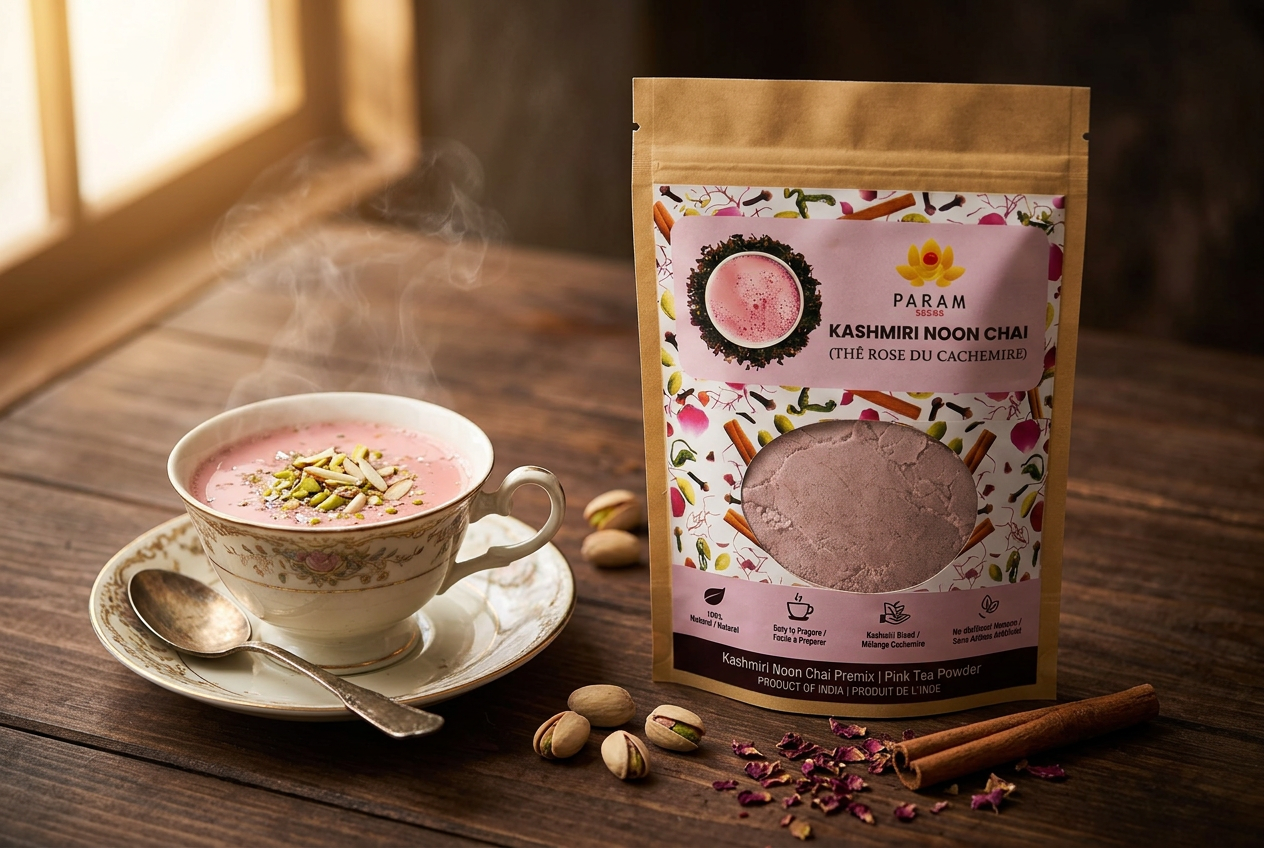
Discover the cultural heritage, unique chemistry, and savory taste of Kashmiri Noon Chai, the legendary pink tea. Learn how it's made and enjoyed in the valley.
''' In the heart of the Kashmir Valley, where the air is crisp with the scent of pine and frost, the day begins not with a jolt of caffeine, but with a gentle, warming ritual. Long before the sun crests the Himalayas, the Kesar kitchens of Srinagar come alive with a sound unique to this place: the rhythmic churning and bubbling of a tea that is not brown, or black, or even green, but a soft, surprising, and utterly beautiful pink. This is noon chai, or sheer chai—a beverage that is as much a symbol of Kashmiri identity as the shikara boats on Dal Lake. The Heart of the Samovar To understand noon chai is to understand the Kashmiri way of life. Its origins are steeped in the lore of Central Asia, traveling along the Silk Road and embedding itself firmly into the valley’s soul. The name itself is simple: noon means ‘salt’ in the local Koshur language. Unlike the sweet, milky chais of the Indian subcontinent, this is a savory, buttery, and deeply comforting brew, designed to fortify the body against the biting mountain winters. At the center of this tradition is the samovar, a magnificent copper urn that is often the most prized possession in a Kashmiri home. It is a social hub, a source of constant warmth, and the vessel through which community is brewed. Mornings are spent huddled around its gentle heat, the air filled with the quiet hiss of steam and the clink of porcelain cups. From daily breakfasts that stave off the morning chill to lavish wedding feasts where it’s served in elaborate ceremonies, noon chai is the valley’s constant companion, a shared experience passed down through generations. There is a certain gravity to the process, a slowness that demands presence. You are not just making tea; you are participating in a conversation that spans centuries. The Alchemy of Pink The most enchanting quality of noon chai is, of course, its color. A cup of this tea glows with the soft blush of a Himalayan dawn. This remarkable transformation is not the result of any dye or artificial additive, but a beautiful feat of kitchen chemistry—a process that feels like pure alchemy. It begins with a special variety of green tea leaves, grown only in specific high-altitude regions. These leaves are boiled vigorously, not gently steeped. The first secret is the addition of a small pinch of sodium bicarbonate, or phul , as it’s known locally. This alkaline ingredient reacts with the chlorophyll in the tea leaves, beginning the transformation. But the true magic happens in the next step: aeration. The tea is shocked with a splash of cold water or ice and then vigorously whisked or ladled from a height, pulled in a long, continuous stream. This act of introducing oxygen creates a chemical reaction with the polyphenols (catechins) in the tea, turning the liquid from a murky greenish-brown into a deep, shocking, burgundy-red concentrate known as tyoth . A Savory Tradition Once the crimson tyoth is ready, the final stage begins. Whole milk is added, along with a crucial measure of salt, transforming the deep red into its iconic, warm pink. The tea is gently heated but never boiled again. The result is a creamy, velvety liquid with a complex flavor profile: salty, savory, and slightly nutty, with a rich, buttery mouthfeel. There is no sugar here; the taste is earthy and grounding. To drink noon chai is to participate in a complete sensory ritual. It is traditionally served in small, handle-less porcelain cups called khos . But it is never served alone. The essential companions are traditional Kashmiri breads, delivered fresh from the local kandur , or baker. There is the girda , a soft, round, dimpled bread with a delightful chew, perfect for dipping. And there is the bakarkhani , a magnificent, layered, and flaky flatbread, which soaks up the savory tea while adding its own rich texture. A final flourish of crushed pistachios and almonds is often scattered on top, adding a delicate crunch. This is the breakfast of the valley—a meal that is both sustenance and sacrament. The Ritual, Reimagined In Kashmir, the making of noon chai is a slow, meditative art that can take well over an hour. It is a labor of love, a ritual that anchors the day. For those of us living far from the valley, recreating this authentic experience can feel daunting. The specific tea leaves are hard to find, and the process requires patience and practice. It is with this in mind that we sought to honor this tradition by making it accessible to all, without sacrificing its soul. Our Param Kesar® Organic Kashmiri Noon Chai premix is a tribute to the timeless art of the samovar. We’ve done the slow work—the careful selection of leaves, the precise boiling, the magical aeration—to create a fine powder that captures the authentic essence of the valley. It allows the ritual to be revered and, most importantly, practiced. To brew a cup is now a simple, beautiful act. You need only warm milk upon the stove, whisking in a spoonful of the fine, rose-tinted powder until it dissolves into a velvety stream of pink. A final pinch of salt awakens its true Kashmiri soul, ready to be enjoyed in minutes, not hours. It is the ritual, reimagined for the modern home—a direct line to the heart of Kashmir, in a cup. Bring the ritual home Param Kesar® Organic Kashmiri Noon Chai A 100g premix that captures the samovar in a tin — slow-aerated, rose-tinted, ready in minutes. Just warm milk, a spoonful, a pinch of salt. · Authentic pink hue from natural baking-soda chemistry — no dyes · One tin makes ~30 cups · Hand-blended in small batches Shop Noon Chai → Read reviews '''