Kashmiri Noon Chai vs. Japanese Matcha: Creamy Comfort Meets Whisked Focus
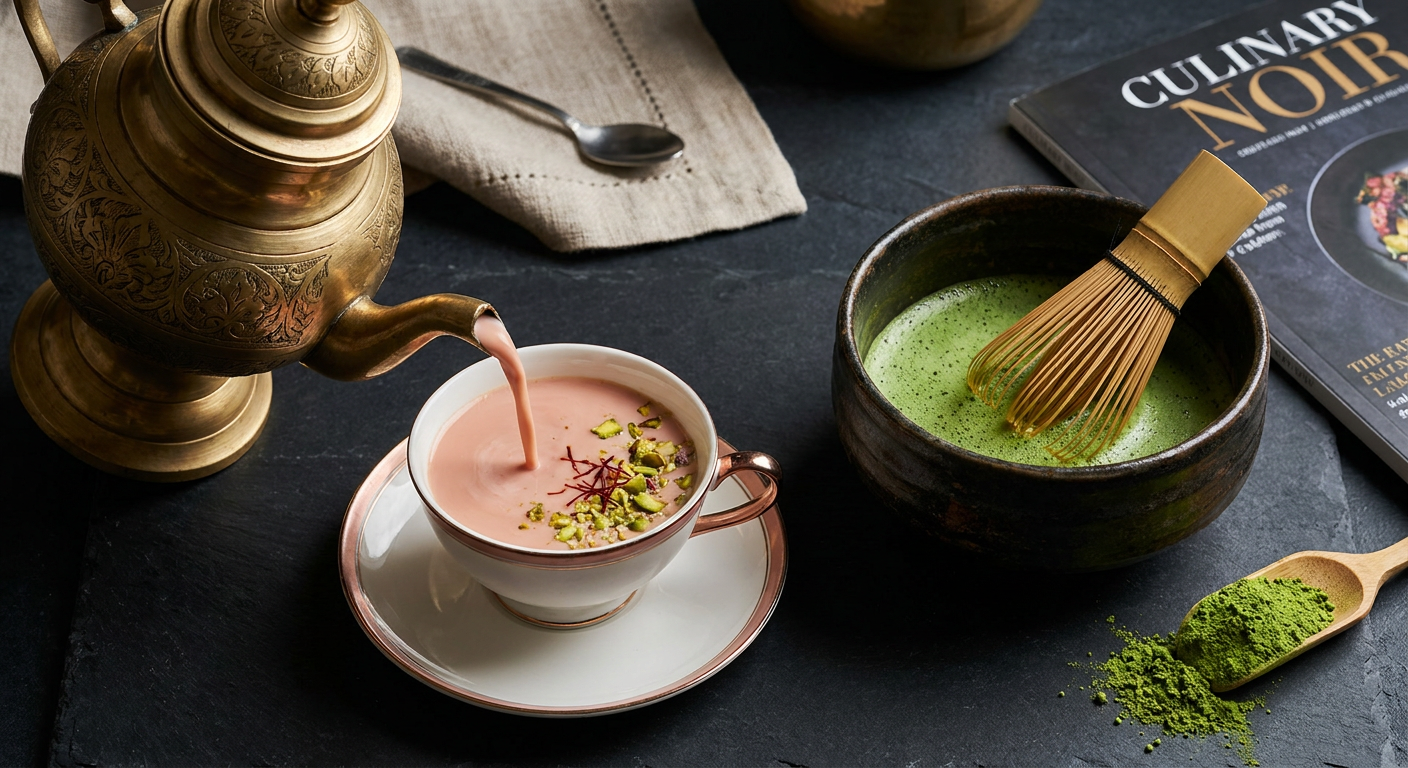
Discover the differences between Kashmiri Noon Chai and Japanese Matcha, from their history and preparation to their unique flavor profiles and cultural significance.
In the vast world of tea, few beverages are as deeply entrenched in ritual and identity as Kashmiri Noon Chai and Japanese Matcha. At a glance, they are both green teas, yet they occupy opposite ends of the sensory and cultural spectrum. One is a warm, salty, salmon-pink brew born from the rugged mountains of the Kashmir Valley, a symbol of communal hospitality. The other is a vibrant, emerald-green froth from the serene temples of Japan, a tool for meditation and focused clarity. To understand Noon Chai and Matcha is to travel to two different worlds and explore two profound philosophies, all through the medium of a single plant: Camellia sinensis . Origins & History Noon Chai, also known as Sheer Chai or Gulabi Chai (Pink Tea), is the lifeblood of Kashmir. Its origins are steeped in the history of the region, likely influenced by the tea traditions that traveled along the Silk Road from Central Asia. For centuries, it has been the quintessential drink of the Kashmir Valley, a daily necessity that provides warmth and sustenance against the harsh, cold winters. It is a beverage of community and family, brewed for hours in a traditional samovar and shared among loved ones and guests as a gesture of welcome and comfort. Matcha’s story, in contrast, begins in the spiritual realm of Zen Buddhism. While powdered tea first gained popularity in Song Dynasty China, it was a Japanese monk named Myōan Eisai who, upon returning from China in 1191, introduced both Rinzai Zen and the practice of preparing powdered green tea to Japan. The custom was initially embraced by monks as a way to stay alert and focused during long periods of meditation. Over centuries, this practice evolved into the highly codified and aesthetically refined Japanese Tea Ceremony, or Chanoyu (“the way of tea”), a discipline that seeks to embody harmony, respect, purity, and tranquility in the simple act of making and receiving a bowl of tea. The Leaf & The Process The profound difference between these two teas begins with the leaf itself and its transformation. Noon Chai is traditionally made from a robust, assertive green tea known as gunpowder tea. These are leaves from the Anhui province of China that have been withered, steamed, and rolled into tight pellets resembling buckshot. The magic—and the color—of Noon Chai comes from a unique chemical reaction. The gunpowder tea is boiled vigorously and at length with a pinch of sodium bicarbonate (baking soda). This alkaline environment reacts with the tea’s chlorophyll and catechins, changing the brew from green to a deep, wine-red. When milk is added, this rich red liquid transforms into its characteristic salmon-pink hue. Matcha is born from a process of deliberate care and deprivation. It is made from shade-grown tea leaves called tencha . For about 20–30 days before harvest, the tea bushes are covered to protect them from direct sunlight. This forces the plant to produce more chlorophyll and L-theanine, an amino acid, resulting in a vibrantly green leaf with a deep, savory sweetness (umami). After harvesting, the leaves are gently steamed and dried, and the stems and veins are meticulously removed. The remaining pure leaf matter, the tencha , is then stone-ground into an incredibly fine, talc-like powder. With Matcha, the entire leaf is consumed, not just an infusion of it. Ritual & Preparation Preparing Noon Chai is an act of patience. Traditionally, it is brewed in a large, ornate metal vessel called a samovar, an heirloom in many Kashmiri families. The tea leaves are boiled with baking soda and water for up to an hour, often aerated by pouring the liquid back and forth with a ladle to develop the color and flavor. This concentrated brew, called “tyoth,” is then steeped with milk, salt, and sometimes a whisper of cardamom. The final tea is served in small, handleless glasses called *khos*, often topped with a dollop of cream and a sprinkle of crushed pistachios or almonds. The entire process is a slow, communal ritual centered around the hearth. Making Matcha is a performance of precision and mindfulness. The ritual requires a specific set of tools: a bamboo whisk (*chasen*), a tea bowl (*chawan*), and a bamboo scoop (*chashaku*). A small amount of Matcha powder is sifted into the pre-warmed bowl to prevent lumps. A small amount of hot (not boiling, typically 175°F/80°C) water is added. The whisk is then used to vigorously trace a ‘W’ or ‘M’ pattern, rapidly agitating the mixture until a thick, stable foam with tiny, uniform bubbles covers the surface. The preparation is quick, focused, and deeply personal, culminating in a single, perfect bowl. Flavor & Aroma The flavor profiles of Noon Chai and Matcha are a world apart. Noon Chai is definitively savory. It is creamy, buttery, and distinctly salty, with a subtle, underlying nutty bitterness from the tea that balances the richness of the milk. The aroma is warm and comforting, with notes of cooked milk, salt, and the gentle spice of cardamom. It’s a substantial, nourishing beverage that feels more like a thin, savory soup than a typical tea. High-quality Matcha offers an incredibly complex and layered experience. Its primary characteristic is a profound *umami*—a rich, savory, and satisfying flavor reminiscent of seaweed or broth. This is balanced by a natural sweetness and subtle, pleasant vegetal notes often described as fresh grass or sweet peas. The texture is equally important: a well-whisked bowl of Matcha is creamy and smooth, with a frothy head that coats the palate. There is a slight, pleasing bitterness (*shibumi*) in the finish that provides structure and depth. Attribute Kashmiri Noon Chai Japanese Matcha Origin Kashmir Valley Japan (via Zen Buddhist monks from China) Color Salmon pink to beige Vibrant, emerald green Base Tea Gunpowder green tea Shade-grown, stone-ground tencha Flavor Profile Salty, creamy, nutty, savory Umami-rich, vegetal, subtly sweet Key Additions Salt, milk, baking soda, cardamom Water only Texture Thin, creamy, soupy Thick, smooth, frothy Preparation Vessel Samovar (slow-boil) Chawan (whisked) Cultural Role Communal hospitality, warmth, comfort Meditative focus, mindfulness, artistry Caffeine, L-Theanine & Antioxidants Because you consume the entire tea leaf, Matcha delivers a more potent dose of caffeine and nutrients than most brewed teas. It is particularly famous for its high concentration of L-theanine, an amino acid that promotes relaxation and a sense of calm without drowsiness. The combination of caffeine and L-theanine is what gives Matcha its celebrated ability to induce a state of "calm alertness," making it ideal for focus and meditation. It is also packed with catechins, particularly epigallocatechin gallate (EGCG), a powerful antioxidant. Noon Chai’s chemical profile is more complex due to its unique preparation. The long, alkaline boiling process likely alters and degrades some of the tea’s original antioxidants, including EGCG. However, this same process may also create new, unique compounds not found in other teas. The caffeine content is present but is moderated by the addition of milk and the long cooking time. The overall effect is less of a sharp mental lift and more of a sustained, warming energy—a feeling of being fortified from within. When to Drink Each In Kashmir, Noon Chai is an all-day staple. It is the first thing many drink in the morning, often served with traditional breads like *tandoori roti* or *girda*, and it is consumed throughout the day, especially during social visits. Its warming, fortifying properties make it essential during the cold months. Matcha is typically consumed in the morning or early afternoon. Its combination of caffeine and L-theanine makes it a perfect replacement for a morning coffee to start the day with focused energy, or as an afternoon pick-me-up to overcome a slump without the jitteriness that can come from other caffeinated drinks. It is generally avoided in the evening due to its potent caffeine kick. Two Philosophies in a Cup Ultimately, Noon Chai and Matcha represent two distinct ways of being. Noon Chai is a tea of togetherness. It is brewed in a large vessel for many to share. Its salty, nourishing warmth is a gesture of welcome, a way to build and maintain community bonds in a harsh environment. It speaks to resilience, comfort, and the profound beauty of shared hospitality. It is a tea that looks outward, connecting person to person. Matcha is a tea of introspection. It is prepared one bowl at a time, a fleeting work of art to be appreciated in the present moment. The ritual demands focus,Quiets the mind, and draws the drinker’s attention inward. It embodies the Zen principles of impermanence, simplicity, and finding beauty in small, deliberate actions. It is a tea for connecting with oneself. Both traditions, in their own way, elevate tea from a simple beverage to a meaningful ritual. They remind us that the ingredients we choose and the care we take in preparation can transform a daily habit into a profound experience. Celebrate these rich global traditions with the finest authentic ingredients from Param Kesar®, and you honor the deep history brewed in every cup.